


Acupuncture 30 min
€50,00
Read more Acupuncture is a treatment method originally developed in China around 4,000 years ago. It involves inserting very thin needles into specific points on the skin, muscle, or the fascia covering the muscles, known as acupuncture points. In traditional Chinese thinking, acupuncture aims to influence the flow of energy that travels along pathways called meridians. Pain or symptoms are believed to result from a blockage in one of these pathways.
Book now
In Western countries, acupuncture is mainly used to treat musculoskeletal pain conditions, migraines, and withdrawal symptoms. Scientifically, acupuncture has been shown to relieve pain through several mechanisms. It can modify the activity of brain regions involved in pain processing, enhance the function of nerve pathways that inhibit pain, and reduce the pain signals traveling from the affected area to the brain. Acupuncture also stimulates the brain to release the body’s natural pain-relieving substances, such as endorphins. In addition, it can reduce the overactivity of the sympathetic nervous system, which is often associated with chronic pain.
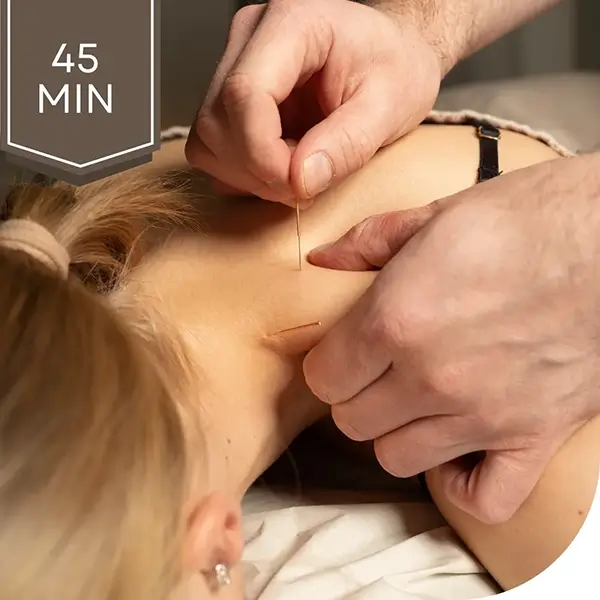
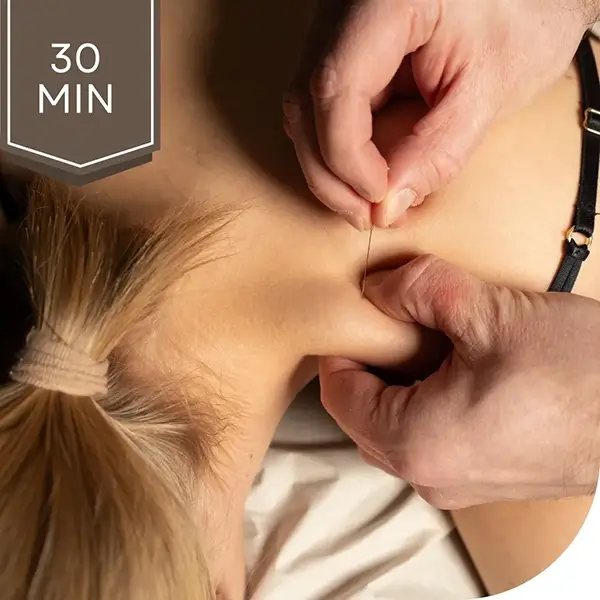
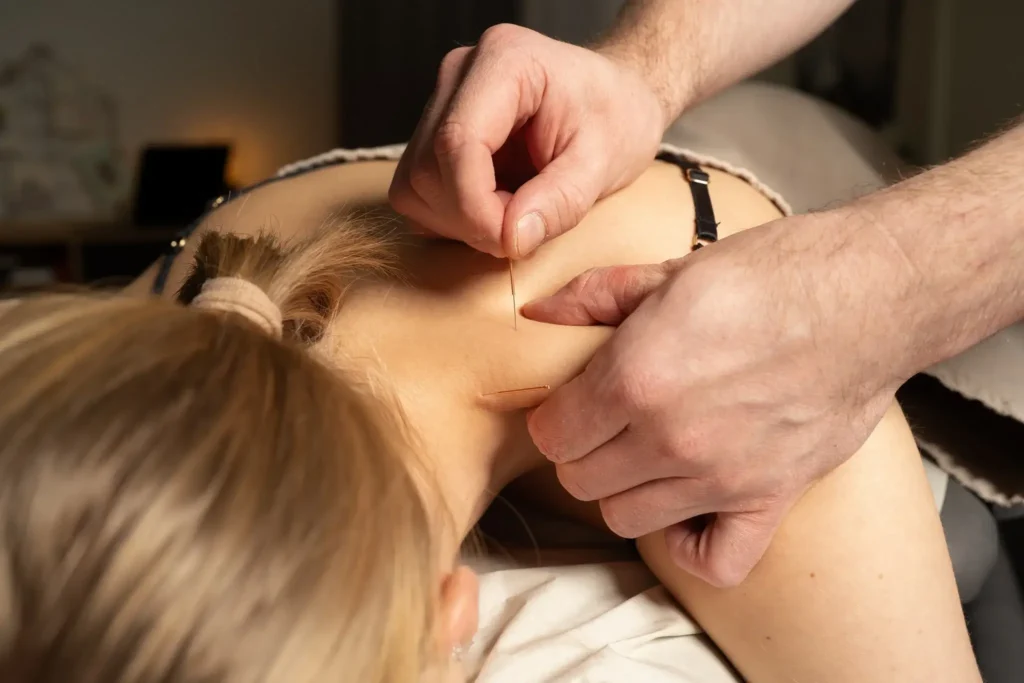
In an acupuncture treatment, selected points are needled with about 5–15 fine needles depending on the symptoms. One session lasts approximately 20–40 minutes. One treatment may have an immediate effect, but a course of 2–5 sessions over about two weeks is generally recommended.
At the beginning of the session, the therapist assesses the situation and determines the number and placement of needles, as well as the treatment approach. In many cases, the therapist may also recommend additional treatments such as physiotherapy, massage, or exercises to support the effects of acupuncture.
The patient lies either on their stomach, back, or side depending on the treatment area. Single-use, sterile needles are used.
When the needle is inserted, a mild sensation or tingling may be felt. Once in place, there may sometimes be a feeling of pressure around the needle, which usually subsides after a short time. Acupuncture is generally a painless treatment.
© 2026 Suomen Urheiluhierontakeskus SUHK Oy | Terms of Service | Privacy Policy | Internal Control Plan